Enriched Acoustic Environment (EAE)

- What it is: Low-effort enriched sound exposure for daily listening.
- Target: Tinnitus handicap.
- Study size: 82 participants.
- Conclusion: Meaningful reductions in tinnitus handicap over 4 months.

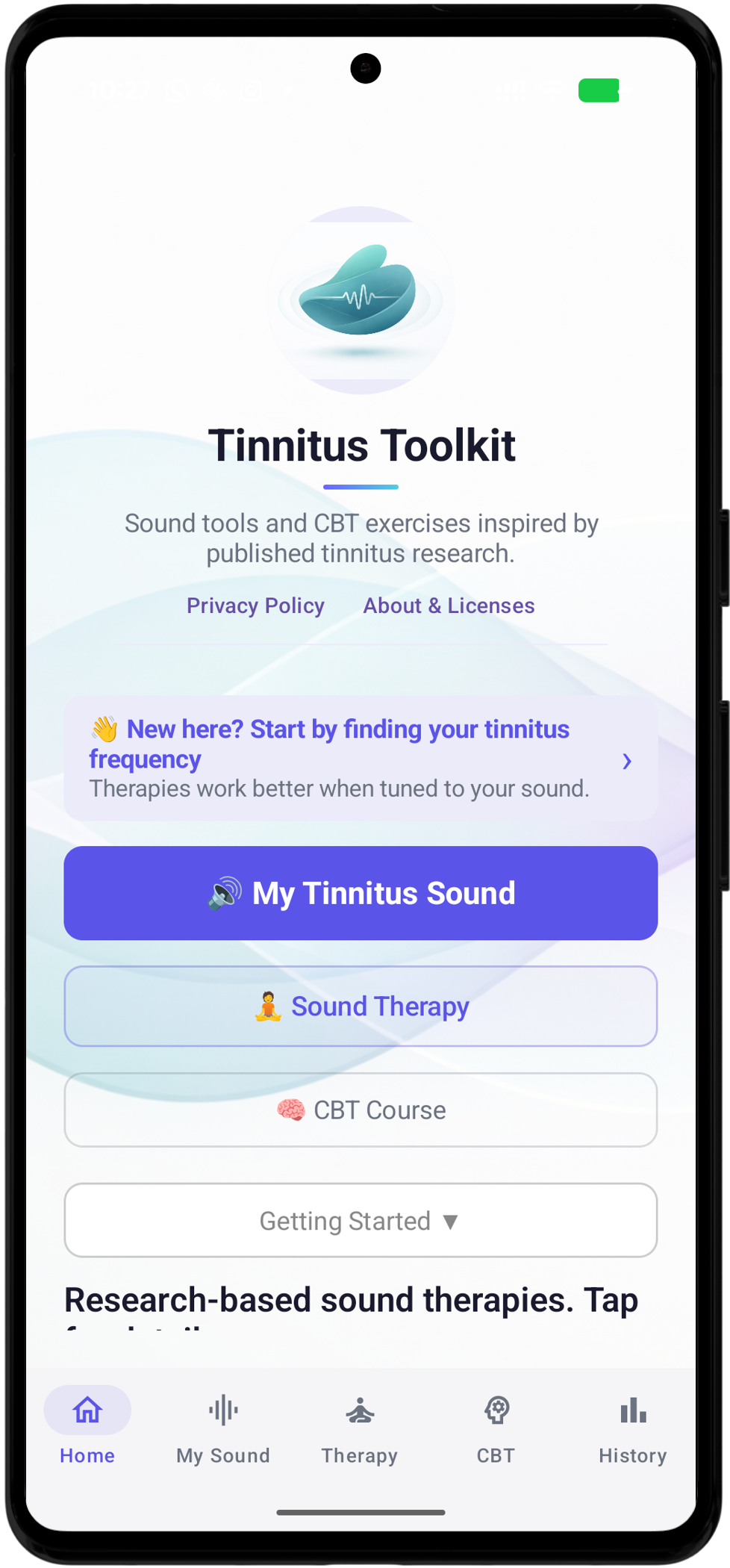
Tinnitus Toolkit combines research-based sound therapies with CBT-style tools to support tinnitus management, based on peer-reviewed techniques.
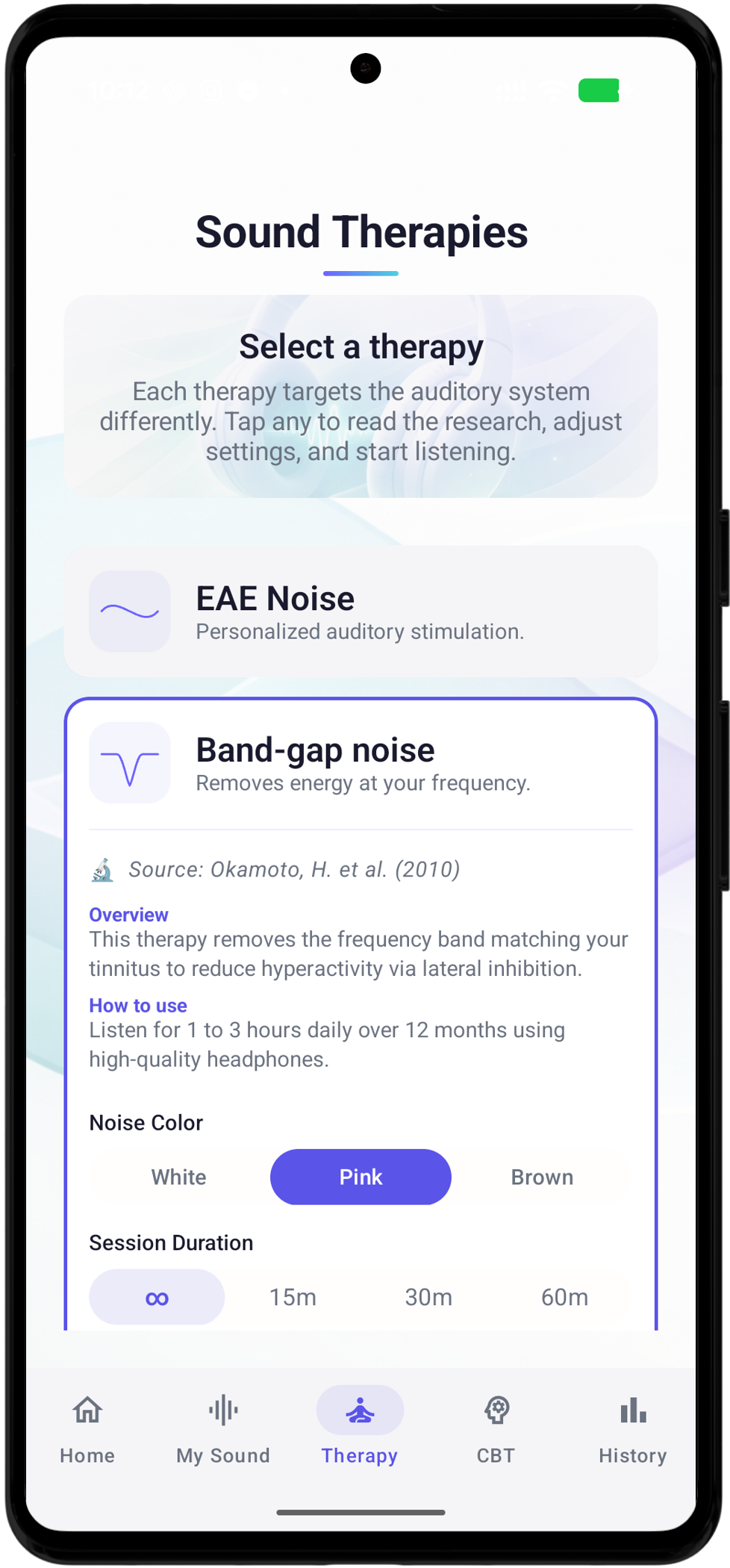
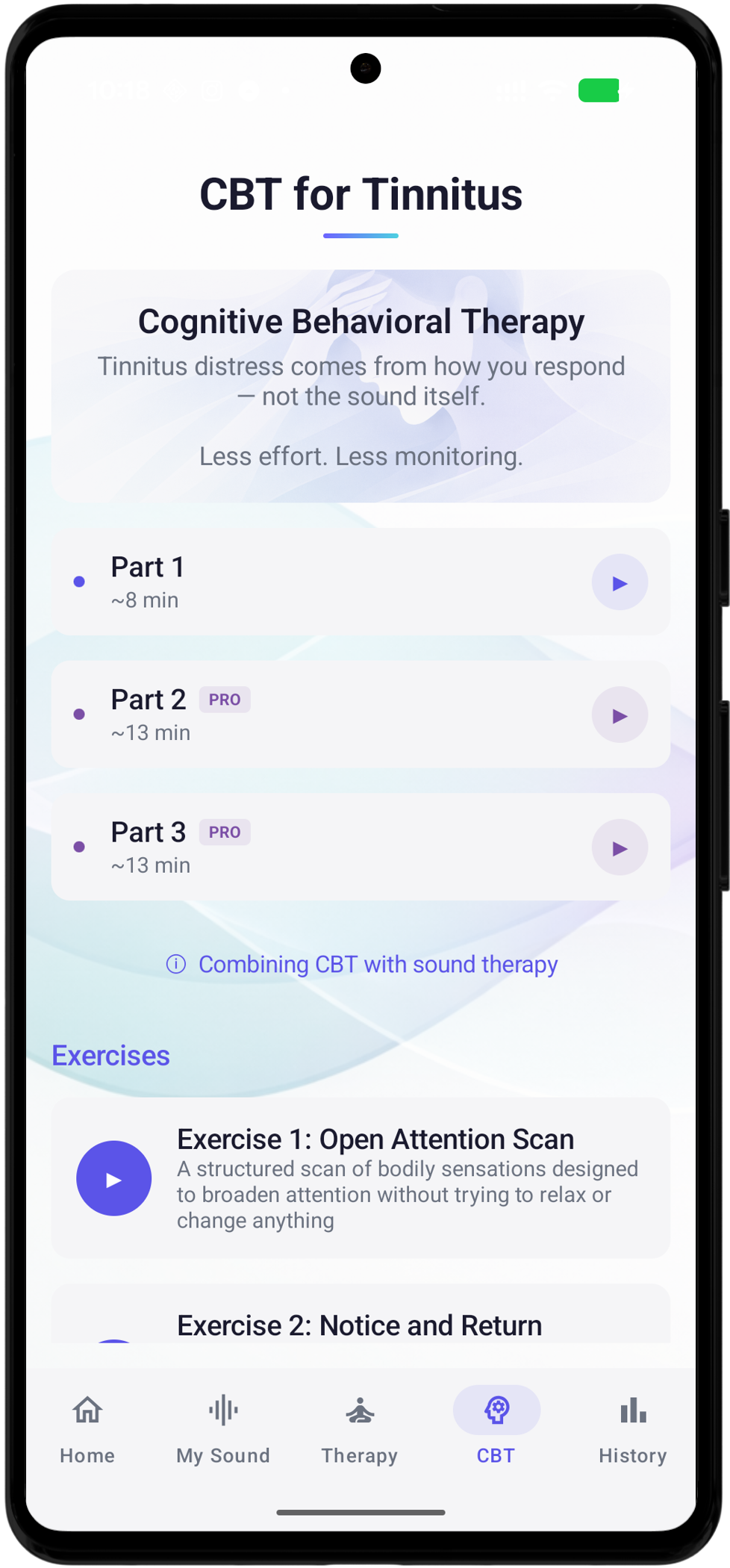
Four sound therapies target tinnitus in different ways: band-gap filtering, flanking bands, enriched acoustic environments, and decorrelated tones. A separate CBT course addresses how you respond to tinnitus — not the sound itself.
Understanding the condition is the first step toward managing it.
The brain can learn to filter tinnitus out. Most people who manage it well have simply stopped noticing it.
CBT exercises help retrain attentionTargeted sound may reduce tinnitus perception over time. Four research-based therapies, each targeting the auditory system differently.
4 therapies includedTinnitus has a pitch — usually 4–12 kHz. Therapy works better when it's matched precisely to yours.
Find yours with the frequency matcherNoise exposure, stress, jaw tension, certain medications. Knowing your triggers helps you manage flare-ups.
Hearing profile personalises EAE therapyCombine focused treatment with background therapy
Dedicated treatment time. Headphones on, minimal distractions. Let the modulated tones work on neural synchrony.

Change how your brain responds to tinnitus. Work through the course at your own pace, then use exercises as scheduled practice — not as a response to symptoms.
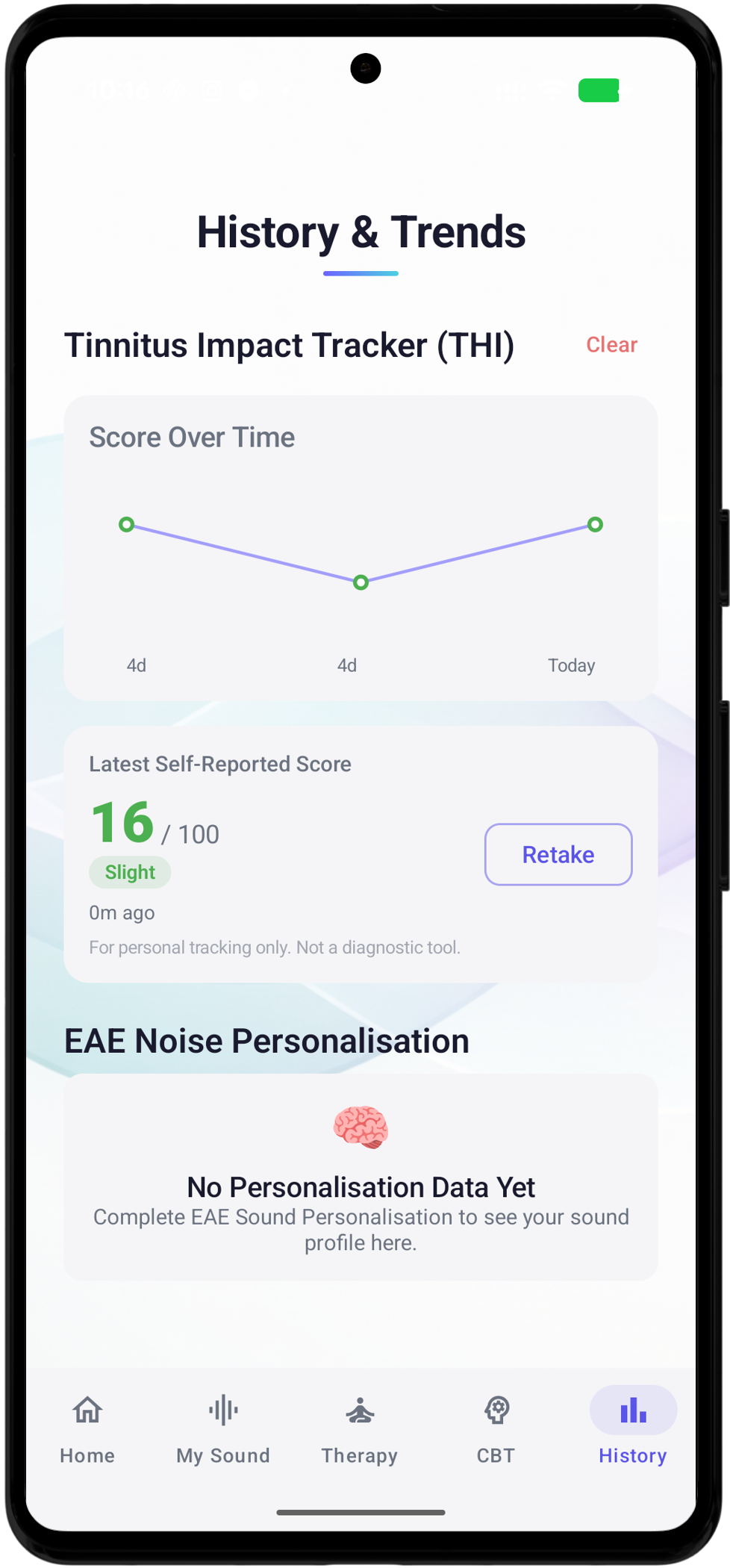
The built-in THI questionnaire tracks how tinnitus affects your daily life over time. Retake it every few weeks and see how your score changes.
Brief, referenced summaries — for orientation and further reading.